Idaho Window Tint Laws in 2026: What Nampa and Boise Drivers Need to Know
Getting your windows tinted is one of the most popular and practical vehicle upgrades in the Treasure Valley — and for good reason. Canyon County summers are hot, the high-desert sun is intense, and window film delivers real comfort benefits alongside UV protection for you and your passengers. But before you book an appointment, one question matters above all else: what's actually legal in Idaho in 2026?
Idaho's window tinting laws set specific visible light transmission (VLT) requirements for each window position on your vehicle, with different rules depending on whether you drive a sedan or an SUV, van, or truck. Getting it wrong doesn't just risk a fine — an illegal tint job means paying to have it removed and redone, which costs more than doing it right the first time. Understanding Idaho's rules before you walk into any tint shop in Nampa, Caldwell, Meridian, or Boise puts you in a position to make a confident, informed choice.
This guide covers everything Idaho drivers need to know: the legal VLT limits for every window, reflectivity rules, what's allowed on the windshield, the 3% tolerance provision, medical exemptions, penalties for violations, and how Idaho's law compares to the neighboring states you're most likely to drive through.
ShadowFilms Window Tinting in
Nampa installs all film in compliance with Idaho law and can walk you through your options at your free estimate.
What Is VLT and Why Does It Matter?
VLT stands for Visible Light Transmission — the percentage of visible light allowed through both the film and the glass combined. This is the core measurement Idaho law uses to regulate tint darkness.
The lower the VLT percentage, the darker the tint. A 35% VLT film allows 35% of light through and blocks 65%. A 20% VLT film allows only 20% of light through and blocks 80% — noticeably darker. A 5% VLT film (often called "limo tint") blocks 95% of light and is essentially opaque from outside.
One important technical point: the VLT measurement that matters legally is the combined reading of film plus glass, not just the film rating on its own. Factory glass already reduces light transmission slightly, so a film sold or described as "35%" may produce a final combined reading that's meaningfully lower — particularly when applied to already-tinted factory rear glass. A professional installer measures final combined VLT to confirm compliance. This is one reason that working with an experienced shop like ShadowFilms matters: knowing the combined measurement before installation prevents an expensive surprise at a traffic stop.
Idaho's 2026 Window Tint Laws: The Full Breakdown
Idaho's tinting statutes are found under Idaho Code § 49-944. The current rules, confirmed accurate for 2026, are as follows. Note that Idaho applies the same VLT limits to both sedans and SUVs/vans/trucks — the rules are consistent across vehicle types.
Windshield
Non-reflective tint is permitted on the top portion of the windshield, above the manufacturer's AS-1 line or within the top six inches of the windshield, whichever is lower. No tint of any kind is allowed in the driver's primary field of vision below that line under standard law. Reflective or colored tint strips on the windshield are not permitted.
Front Side Windows
Must allow more than 35% of light in. This means any film applied to the driver's window and the front passenger window must produce a combined VLT reading greater than 35%. This is the most important restriction for most drivers — it's the limit most commonly violated and most consistently enforced.
Back Side Windows
Must allow more than 20% of light in. Idaho permits meaningfully darker tint on the rear passenger windows, giving drivers real options for privacy and heat rejection behind the front doors without running into legal issues.
Rear Window
Must allow more than 35% of light in. The rear window in Idaho returns to the same 35% threshold as the front side windows — an important distinction from some other states that allow unlimited darkness on the rear glass. For Idaho drivers looking to go darker on the back of the vehicle, the back side windows (at 20%) offer more flexibility than the rear windshield.
| Window Position | Legal VLT Minimum (Sedans) | Legal VLT Minimum (SUVs/Vans/Trucks) |
|---|---|---|
| Windshield | Non-reflective only above AS-1 line | Same |
| Front Side Windows | More than 35% | More than 35% |
| Back Side Windows | More than 20% | More than 20% |
| Rear Window | More than 35% | More than 35% |
Reflectivity Rules
Idaho law also regulates how reflective window tint can be. Tint can reflect incoming light to reduce glare and heat, but overly reflective or mirrored film creates hazards for other drivers and is restricted.
In Idaho, both front side windows and back side windows must not be more than 35% reflective. Metallic or mirror-finish films that exceed this threshold are not legal under standard Idaho law. Most quality non-metallic films — including ceramic tints, which are the highest-performing option for heat rejection without signal interference — have naturally low reflectivity and clear this requirement easily. Idaho's 35% reflectivity ceiling is relatively generous compared to neighboring states like Oregon, which limits reflectivity to just 13%.
Restricted Colors
Idaho does not specify any particular tint colors as banned. There is no prohibition on amber, red, or other colored films under current Idaho law — though as always, individual law enforcement interpretation can vary, and colored tint that could be confused with emergency vehicle lighting is generally inadvisable regardless of technical legality.
The 3% Tolerance Provision
Idaho law includes a 3% light transmission tolerance. In practice, this means a vehicle measuring at 32% or higher on front side windows may fall within the enforceable compliance range even though the legal minimum is 35%. This provision exists to account for measurement variability between different testing devices. However, it should not be treated as license to deliberately install film that tests at 32–35% — it is a tolerance for incidental measurement variance, not an invitation to install tint intentionally at the edge of the legal limit.
Stickers and Certification
Idaho does not require a compliance sticker on the vehicle to identify that legal tinting has been installed — unlike some states (Oregon being the most notable nearby example) where a sticker is mandatory. Idaho also does not require film manufacturers to certify the film they sell in the state. This makes enforcement entirely measurement-based at traffic stops.
Medical Exemptions in Idaho
Idaho provides a medical exemption pathway for drivers with qualifying conditions that require additional sun protection. Under the exemption, qualifying individuals can apply for permission to use tint significantly darker than standard legal limits — including tint as dark as 20% VLT on front side windows and even on the windshield, which would not otherwise be permitted.
To qualify, a driver must obtain written certification from a licensed physician documenting the specific medical condition that makes standard tint insufficient. Conditions that commonly qualify include certain photosensitive skin conditions, autoimmune disorders triggered by UV exposure, and specific eye conditions where light sensitivity requires additional protection.
Key points about Idaho's medical tint exemption: documentation from the physician must be kept in the vehicle when operating it, the exemption relates to Idaho law only and does not protect you from enforcement in other states, and the Idaho Transportation Department is the authoritative source for current exemption application procedures. If you believe you may qualify, the first step is consultation with your physician, followed by verification of current application requirements with the Idaho Transportation Department.
What Happens If You Get Caught With Illegal Tint in Idaho?
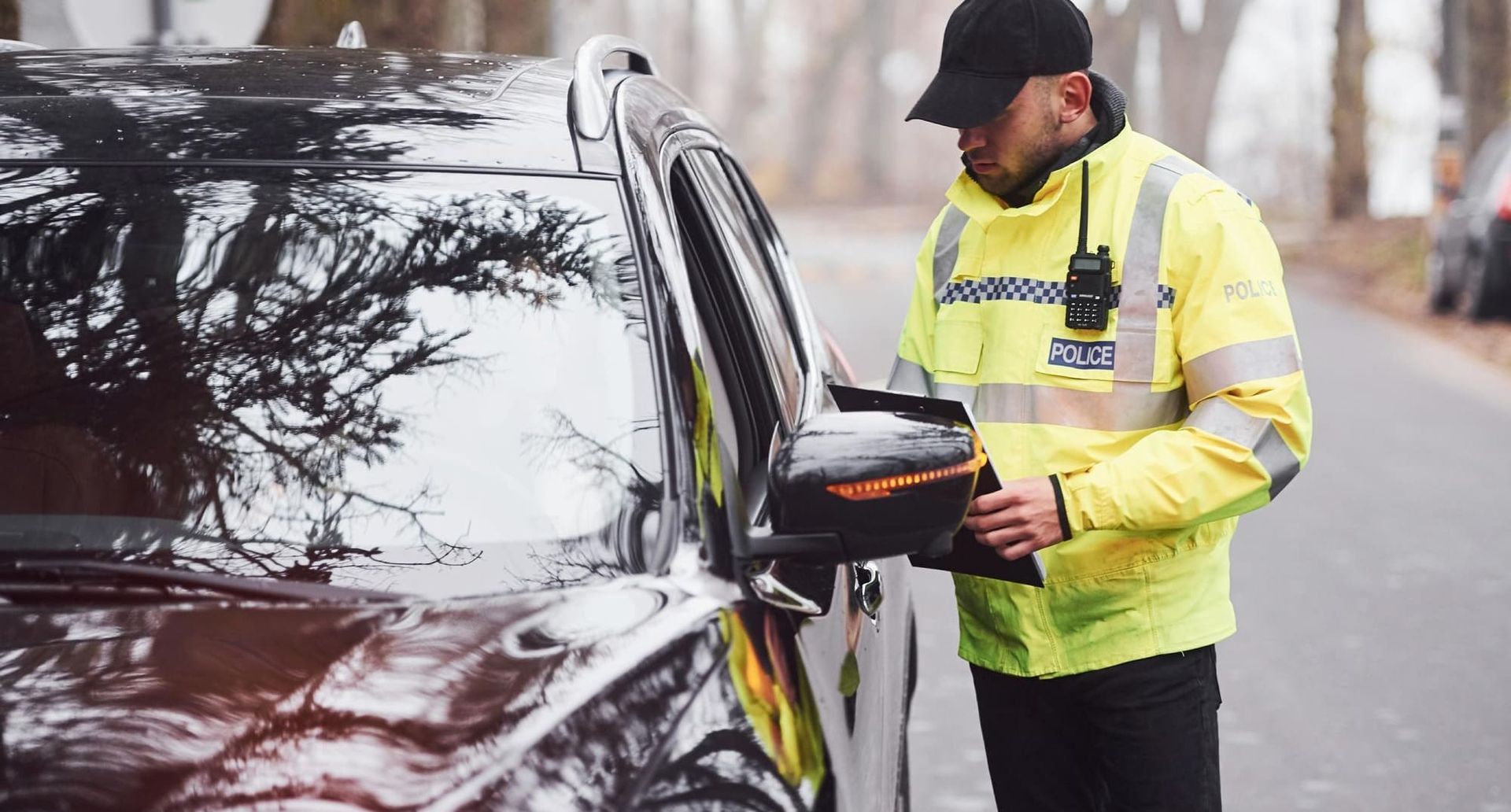
Illegal window tint in Idaho is classified as a traffic infraction. Fines generally range from around $67 to $300 depending on the circumstances and county, though the specific amount can vary based on local court practices. Beyond the fine itself, being cited for illegal tint typically means you're required to bring the vehicle into compliance — which means paying to have the non-compliant film removed and replaced with a legal option. When you factor in the cost of removal plus reinstallation, the total expense of fixing an illegal tint job comfortably exceeds what it would have cost to do it correctly from the start.
Law enforcement in Idaho uses handheld tint meters to measure VLT during traffic stops. If your tint is borderline, the 3% tolerance may work in your favor — but if you're clearly outside legal limits, there's no discretionary leeway for officers to ignore the violation.
How Idaho Compares to Neighboring States You're Likely to Drive Through
Idaho drivers frequently travel into Oregon, Washington, Montana, Utah, and Nevada. Tint laws vary meaningfully between states, and being legal in Idaho does not automatically mean you're legal everywhere you drive. Here is a practical snapshot of each neighboring state's current 2026 rules for front side windows — the limit that tends to differ most significantly across state lines.
Oregon
Oregon requires more than 35% VLT on front side windows for all vehicle types — the same as Idaho's front window limit. However, Oregon is significantly stricter on reflectivity, capping tint at just 13% reflectivity versus Idaho's 35%. Oregon also bans red, amber, gold, yellow, black, and mirror-finish films entirely. Notably, Oregon requires a compliance sticker from a certified installer — a requirement Idaho does not have. For sedans in Oregon, back side and rear windows must also meet 35% VLT. For SUVs, vans, and pickups, the rear windows can be any darkness. If you're crossing into Oregon, your Idaho-legal front windows (35%+) will meet Oregon's VLT standard, but your film's reflectivity needs to be within Oregon's 13% cap.
Washington
Washington allows front side windows as dark as 24% VLT — meaningfully darker than Idaho's 35% requirement. Washington's reflectivity limit is 35%, matching Idaho. Washington bans gold, yellow, and mirror-finish tints. If you're compliant in Idaho at 35% front windows, you're comfortably within Washington's front window limit. For back side and rear windows, Washington allows unlimited darkness for SUVs and trucks with appropriate mirrors, and 24% or greater for sedans.
Montana
Montana allows front side windows as dark as 24% VLT — also darker than Idaho's 35% minimum — with 35% reflectivity permitted. Montana has no specific color restrictions listed beyond those generally implied by reflectivity rules. Your Idaho-legal tint will be fully compliant in Montana.
Utah
Utah requires front side windows to allow at least 43% VLT — notably stricter than Idaho's 35% front window limit. If your front windows test at 35% (legal in Idaho), they may be out of compliance in Utah. Utah allows any darkness on back side windows and rear windows for all vehicle types. Utah's reflectivity limit is 20% — tighter than Idaho's 35%.
Nevada
Nevada requires more than 35% VLT on front side windows, matching Idaho's limit exactly. Nevada allows any darkness on back side and rear windows for all vehicle types — significantly more permissive than Idaho's 35% rear window requirement. Nevada's reflectivity limit is 35%, matching Idaho.
| State | Front Side VLT Minimum | Back Side / Rear | Reflectivity Limit |
|---|---|---|---|
| Idaho | 35% | 20% back sides / 35% rear | 35% |
| Oregon | 35% | 35% sedans / Any SUVs | 13% (strict) |
| Washington | 24% | Any (SUV) / 24% (sedan) | 35% |
| Montana | 24% | Any (SUV) | 35% |
| Utah | 43% (stricter) | Any | 20% |
| Nevada | 35% | Any | 35% |
The key practical takeaway for Idaho drivers: your legal Idaho tint is compliant in Oregon, Washington, Montana, and Nevada for front side windows. If you frequently drive into Utah, pay particular attention — Utah's front window minimum of 43% is stricter than Idaho's 35%, and an Idaho-legal front window tint could result in a citation in Utah.
Frequently Asked Questions
What is the darkest legal tint in Idaho in 2026?
For front side windows, the darkest legal tint is anything that transmits more than 35% of light (35% VLT minimum). For back side windows, the limit is more than 20% VLT, allowing noticeably darker tint. The rear window returns to the 35% minimum. A 3% tolerance applies to these measurements.
Is 20% tint legal in Idaho?
On back side windows (rear passenger side windows), yes — 20% VLT is at the edge of the legal limit and may fall within Idaho's 3% tolerance provision, though deliberately targeting exactly 20% is not advisable. On front side windows or the rear window, 20% tint is not legal in Idaho without a medical exemption.
Does Idaho require a tint compliance sticker?
No. Unlike Oregon, Idaho does not require a sticker on the vehicle to certify legal tinting. Film manufacturer certification is also not required by Idaho state law.
What are the penalties for illegal tint in Idaho?
Illegal window tint is a traffic infraction in Idaho. Fines generally range from approximately $67 to $300 depending on the county and circumstances. You will typically also be required to bring the vehicle into compliance, meaning the film must be removed and replaced, which adds further cost on top of the fine.
Can I get a medical exemption for darker tint in Idaho?
Yes. Idaho allows medical exemptions that permit tint as dark as 20% VLT on windows that would otherwise be held to the standard legal limits, including front side windows. You must obtain written certification from a licensed physician and carry documentation in the vehicle. Contact the Idaho Transportation Department for current application requirements.
How does Idaho's front window tint law compare to Oregon?
Both states require more than 35% VLT on front side windows, so your Idaho-legal tint meets Oregon's VLT standard. However, Oregon has a significantly stricter reflectivity limit of 13% compared to Idaho's 35%, and Oregon requires a compliance sticker from a certified installer that Idaho does not. Check that your film's reflectivity rating complies before driving in Oregon.
The Bottom Line for Nampa, Caldwell, Meridian, and Boise Drivers
Idaho's 2026 window tint rules give drivers meaningful flexibility — especially on back side windows, where 20% VLT allows real privacy and heat rejection — while maintaining a clear 35% standard on front side windows and the rear window. Following the law from the start protects you from fines, the expense of removal and reinstallation, and the inconvenience of traffic stops. The right shop will ensure your tint is measured, installed, and documented correctly so you can drive with confidence.
ShadowFilms Window Tinting is Nampa's premier, trusted, family-owned
window tinting specialist, serving
Nampa, Caldwell, Meridian, Boise, and the greater Canyon County and Ada County area with
LLumar window film products backed by a lifetime warranty. Every installation is completed by professionally trained technicians committed to legal compliance, quality results, and transparent pricing.
Call (208) 999-5110 or request a
free estimate online to find the right film for your vehicle.